Wash Sale Calculator: Calculate IRS Wash Sales & Cost Basis
Free wash sale rule calculator for stock trades, options, RSUs, and short sales. Calculate disallowed losses and track the 30-day wash sale window.
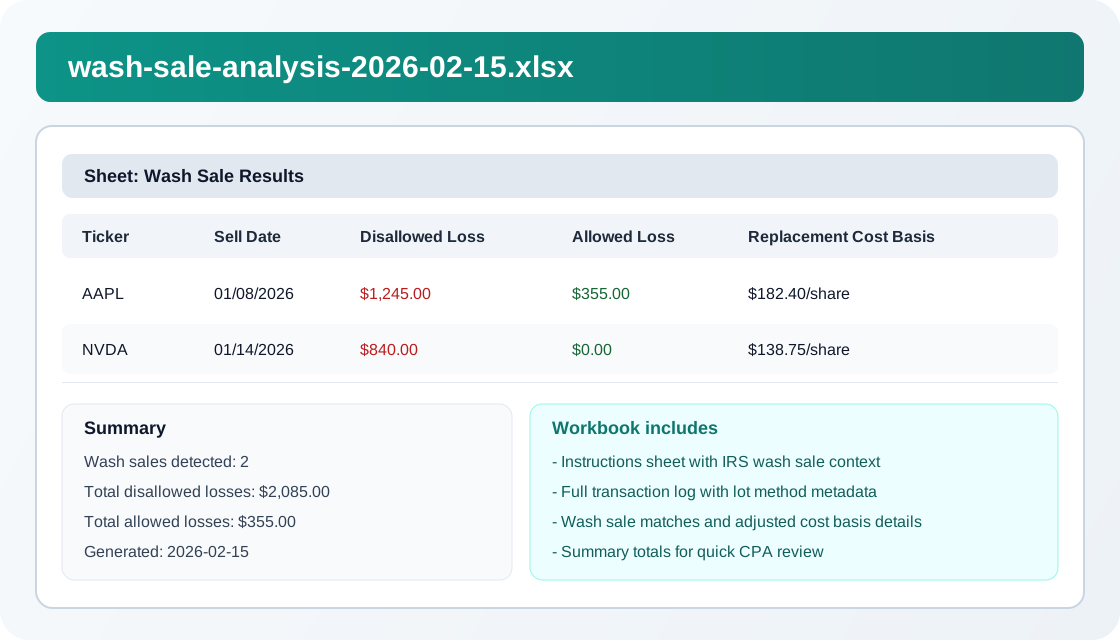
Export an audit-ready Excel report in one click
Every analysis can be downloaded with your transactions, wash sale matches, and adjusted cost basis so you can review or share with your CPA.
- Includes transaction log, wash sale details, and summary totals.
- No account connection required and no data stored server-side.
Enter your buy and sell transactions below to detect wash sales. Supports stocks and options (calls/puts are matched to their underlying stock).
New to wash sales? Learn how RSU vesting can trigger wash sales
Why Use This Free Wash Sale Calculator?
Our wash sale calculator is completely free with no sign-up required. Calculate IRS wash sales in seconds and get accurate tax reporting for stocks, options, RSUs, and short sales.
- Free Forever: No hidden fees, no subscriptions, no credit card required
- IRS Compliant: Follows official IRS Publication 550 wash sale rules
- Multiple Lot Methods: FIFO, LIFO, Average Cost, and Specific Lot selection
- Auto-Detection: Identifies wash sales across the full 61-day window
- Cost Basis Tracking: Calculates adjusted cost basis for replacement shares
- Options Support: Matches call/put options to underlying stocks automatically
- Short Sale Detection: Auto-identifies short positions from transaction patterns
- Privacy First: All calculations happen in your browser - we never store your data
How to Calculate Wash Sales: Understanding the IRS Wash Sale Rule
A wash sale occurs when you sell a security at a loss and buy the same or "substantially identical" security within 30 days before or after the sale. The IRS disallows the loss deduction, which can significantly impact your tax bill.
How Does the Wash Sale Calculator Work? The 61-Day Window Explained
The wash sale rule creates a 61-day window: 30 days before the sale, the sale date itself, and 30 days after. Any purchase of the same security within this window triggers a wash sale.
Common Wash Sale Triggers
- Direct repurchases - Selling and buying back the same stock
- RSU vesting - RSUs that vest within 30 days of selling company stock at a loss
- ESPP purchases - Employee stock purchase plan buys within the window
- DRIP reinvestments - Automatic dividend reinvestment programs
- Different accounts - Buying in an IRA while selling in a taxable account
- Spouse purchases - Your spouse buying the same security
- Options - Buying call options or selling puts on the same stock
Calculating Disallowed Losses: What Happens to Your Tax Deduction?
When a wash sale occurs, the disallowed loss gets added to the cost basis of your replacement shares. The loss isn't lost forever—it's deferred until you eventually sell those shares. But you lose the immediate tax benefit.
Wash Sale Calculation Example: Step-by-Step
Initial purchase: 100 shares at $50 = $5,000 cost basis
Sell at loss: 100 shares at $30 = $3,000 proceeds → $2,000 loss
Repurchase within 30 days: 100 shares at $32 = $3,200
Result: $2,000 loss disallowed, added to cost basis
New cost basis: $3,200 + $2,000 = $5,200
Free Wash Sale Calculator Features: FIFO, LIFO, and Cost Basis Methods
Our wash sale calculator supports multiple lot selection methods to match your broker's reporting:
- FIFO (First In, First Out): Most common method - sells oldest shares first
- LIFO (Last In, First Out): Sells newest shares first
- Average Cost: Uses weighted average of all purchases
- Specific Lot: Manually select which lots to sell for precise tax planning
The calculator automatically detects short sales (no prior buy = short position) and trackspartial wash sales share-by-share. It also matches call and put options to their underlying stock ticker for accurate wash sale detection.
Tax Loss Harvesting Without Triggering Wash Sales
Tax loss harvesting—selling losing positions to offset gains—is a powerful tax strategy. But wash sales can ruin it. If you want to maintain market exposure while harvesting losses, consider buying a similar but not substantially identical security instead.
For example: Sell a total market ETF (VTI) and buy an S&P 500 ETF (VOO). They're similar but not substantially identical, so no wash sale. Always consult a tax professional for your specific situation.
Frequently Asked Questions
Related Resources
- Wash Sale Rules Complete Guide (2026): Core scenarios, examples, and edge cases
- How to Avoid Wash Sales with RSUs: The 30-Day Rule Explained
- RSU Vesting and Sale Planning: A Simple Plan
- RSU Cost Basis and Capital Gains: How to Report Vesting and Sales
- How RSUs Work: Why Your $100K Grant Is Actually Worth $60K
- Year-End Tax Loss Harvesting Checklist
- Capital Gains Tax Optimizer - Calculate gains per lot and simulate trades
- Federal Tax Calculator - Calculate tax impact