2026 Market Crash Analysis: Why AI Capex Suppliers Could Recover First
Last updated: February 7, 2026
Markets just had a sharp reset. Late January brought a tariff-driven risk-off drop, and early February delivered another leg of selling as investors questioned the scale and payoff of AI spending. The move felt like a crash because it was fast and broad, but the underlying story is more nuanced.
Recent stock market crash chart
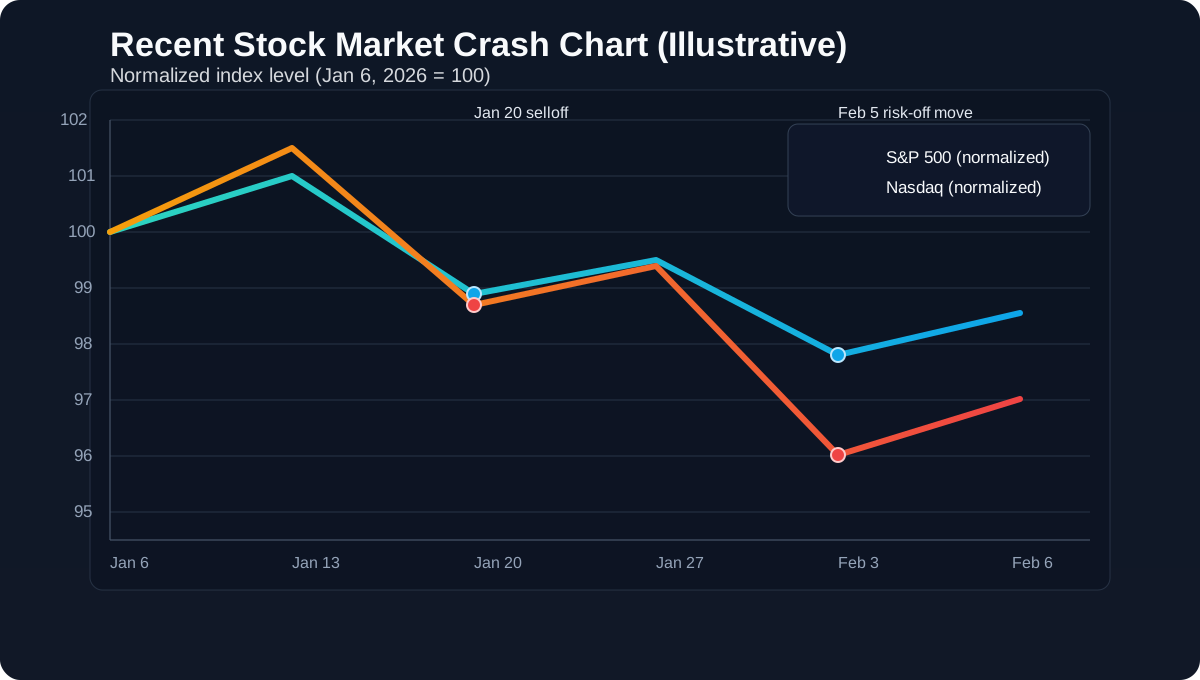
Illustrative chart for commentary. Series are normalized to 100 on January 6, 2026 to show relative drawdown shape.
Big Tech capex scorecard (latest earnings)
As of February 7, 2026, the most recent company disclosures show a clear step-up in AI infrastructure spending:
- Alphabet (Google): 2026 CapEx anticipated at $175-185 billion (about $180 billion at the midpoint). Source: Alphabet Q4 2025 CEO remarks, February 4, 2026.
- Amazon: Expects to invest about $200 billion in 2026 capital expenditures. Source: Amazon Q4 2025 earnings release, February 5, 2026.
- Meta: 2026 capital expenditures expected at $115-135 billion; 2025 capex was $72.22 billion. Source: Meta Q4 and full-year 2025 results, January 28, 2026.
- Microsoft: Reported $29.876 billion in additions to property and equipment in the quarter ended December 31, 2025, and $49.270 billion for the six months ended December 31, 2025. Source: Microsoft FY26 Q2 cash flow statement, reported January 28, 2026.
My read of the crash
The selloff looked less like "demand is gone" and more like "uncertainty got repriced." Investors were forced to re-rate growth assumptions in a hurry. When that happens, the market usually punishes the highest-multiple names first, especially those with the most visible near-term spending.
That is why I separate "capex spenders" from "capex suppliers." They are not the same trade.
Capex is good news for the suppliers
Capex is not a black hole. It is a transfer of revenue to the companies that sell the picks and shovels. When the hyperscalers and large enterprises spend, the money shows up in the supply chain:
- Compute and acceleration
- Networking and interconnect
- Memory and storage
- Power and cooling infrastructure
That is why I am constructive on suppliers like Broadcom (AVGO), SanDisk, Micron (MU), AMD, and Nvidia (NVDA). If the spending plans are real, the suppliers are the first line of beneficiaries.
Sentiment for the big spenders will take longer to recover
The market does not mind spending when the returns are visible. The problem is timing. Large capex programs create a near-term drag on margins while the payoff arrives later and unevenly. That creates a valuation reset that typically takes time to heal.
Here is what I am watching:
- How quickly new capacity turns into revenue
- Whether gross margins stabilize during the buildout
- Whether management guidance points to a clear ROI timeline
Until those signals improve, I expect sentiment and capital flows into the biggest capex spenders to recover slowly.
The bottom line
The crash was a sentiment shock. The capex cycle is still real. My view is that suppliers benefit first, while the spenders have to earn their way back in the market's eyes.
Disclaimer: This article is for educational purposes only and does not constitute financial advice. Consult a qualified financial advisor about your specific situation.
Run both scenarios before you leave
Save this article and compare both tools now so your plan is based on numbers.
Editorial Transparency
This content is informational and does not constitute legal, tax, or investment advice.